Product Oriented Content Strategy for SaaS Product Startups
Are you a SaaS product startup? Looking for what to publish on your SaaS blog.
You don’t have to:
- Do extensive keyword research
- Use expensive keyword research tools
- Create long plans and content briefs
- Deep dive into the industry and niche
No.
The first step is very simple, and yet, many startups miss this.
All you have to do is to write the article on the problem your product is solving. And then integrate your product’s solution into the article.
What is a Product Oriented Content Strategy?
POCS (Product Oriented Content Strategy) is a plan to write the content around the problem and pain points that the product is solving. While giving the solution to the problem, you insert your product as one of the solutions.
How to do POCS?
- Login to your product
- Checkout the feature
- Write down each feature
- Analyze the problem each feature is solving
- What people do who don’t use your product?
- Create article
- Add all the solution
- Add your product’s feature as the easiest method
That’s it.
POCS Example
Breeze:
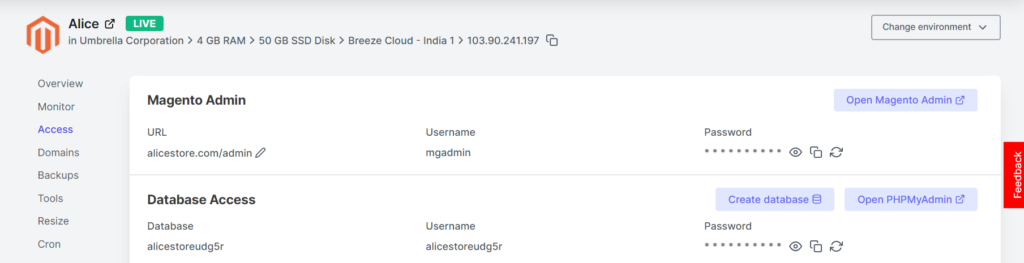
It is a Magento hosting platform to help developers, Magento store owners and agencies to manage and run Magento stores easily.
This is one small section from the Breeze.
From here, you:
- Can change Magento admin URL
- Can change Magento admin Password
- Create new Database
- Open Magento phpMyAdmin
- Change Database password
5 features. And now the issue they solve respectively are:
- How to change Magento Admin URL?
- How to change Magento Admin password?
- How to create a new Magento Database?
- How to open Magento phpMyAdmin?
- How to change Database password?
If you Google search these questions, you will find that changing the Magento admin URL and password is a long process.
But Many articles are ranking and it’s a competitive keyword. You might not rank, but you should publish the content on this keyword.
Why?
- Its related to your product
- Its pitch your product in positive manner
- Its highlight the product’s feature
- Its become the part of documentation
- Support team can send the article to the customers in case
- In-house content for a common question
Example 2
The second example is WP-Rocket.me. It is a speed optimization plugin for WordPress. And if you check their article, the majority of their article is around the product features.
For example:

The article provide the solution to the problem: defer parsing of javascript in WordPress
It gives the:
- Manual approach
- Plugin approach
In a way, the plugin approach is much easier. A click indeed.
Similarly another article:
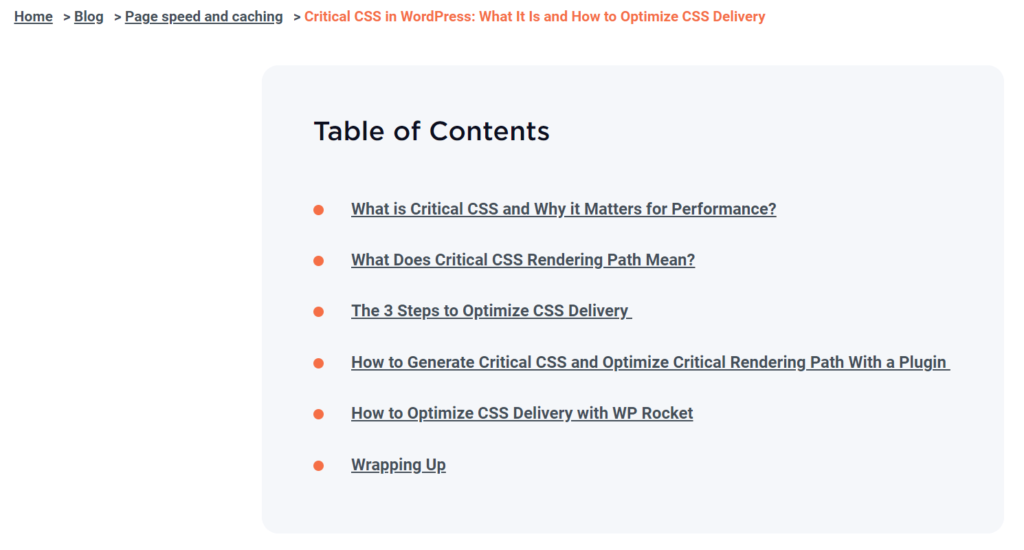
It is about optimizing CSS.
It shows the 3 steps process of optimizing the CSS delivery. And then a single click solution to optimizing CSS delivery.
Is it enough?
Keywords come out of keywords.
Once you start writing the features of the product, and start finding the solutionable article around them – you will find the interesting topics and keywords where you can easily add your product.
And yes. Its enough in the beginning.
It will help you to start a documentation as well as blog. Double advantage.
And most important – product features usually solve related issues. Writing on those issues will lead you to the formation of hub/cluster/academy or whatever you call it.
Long game and short content game – play both.
Wrap Up
This content strategy works great for SaaS startups. As their product quickly solves the problem.
And it is what you need.
Positioning your startup as the solution to the problem.
Let’s discuss in the comment section.


